
When you visit a merchant by clicking a link on this site we may make a commission on anything you buy (at no additional cost to you). Affiliate programs and affiliations include, but are not limited to Amazon Associates and the eBay Partner Network.”
At A Glance
Bohler’s M390 and N690 are both esteemed knife steels with distinct strengths. M390 is a highly hard and corrosion-resistant steel known for remarkable edge retention, although it can be difficult to sharpen. It’s often used in premium knives. N690, offering good toughness and corrosion resistance and easier to sharpen, is a more cost-effective alternative suitable for general use. Choosing between M390 and N690 will largely depend on your specific needs and budget. Both are reputable choices for knives and favored by knife makers and manufacturers. Choosing a trustworthy brand ensures optimal utilization of the steel’s capabilities.
Top Rated Knives
M390


N690


Blade steel indeed plays a pivotal role when it comes to selecting a knife. M390 and N690 are two well-known blade steels that are often pitted against each other. In this analysis, we will juxtapose M390 and N690 considering their composition, hardness, toughness, corrosion resistance, edge retention, and ease of sharpening, to ultimately discern which one takes the crown as the superior knife steel.
The rich tapestry of knife-making materials can be intricate for both the seasoned connoisseur and the budding enthusiast.
To clear up this complex subject, this article will delve into a comprehensive comparison between two renowned knife steel types: Bohler’s M390 and N690.
We’ll examine their composition, and contrast them in terms of their hardness, toughness, corrosion resistance, edge retention, and ease of sharpening to determine which one provides better value for knives.
Steel Background
Prior to diving into the comparison, it’s essential to comprehend what each steel type is and how they’re created.
M390
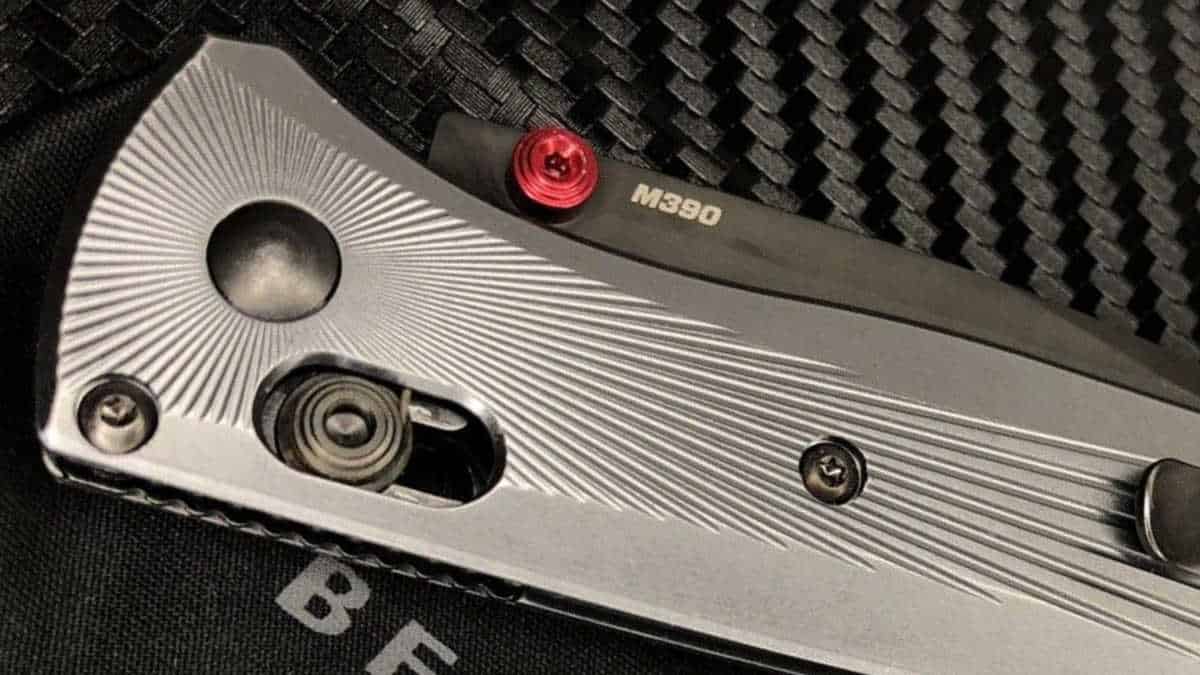
Bohler’s M390 is a third-generation martensitic stainless steel designed to provide excellent corrosion resistance and exceptional hardness. Often found in premium knives, M390 is renowned for its superb edge retention due to its high carbon and chromium content.
N690
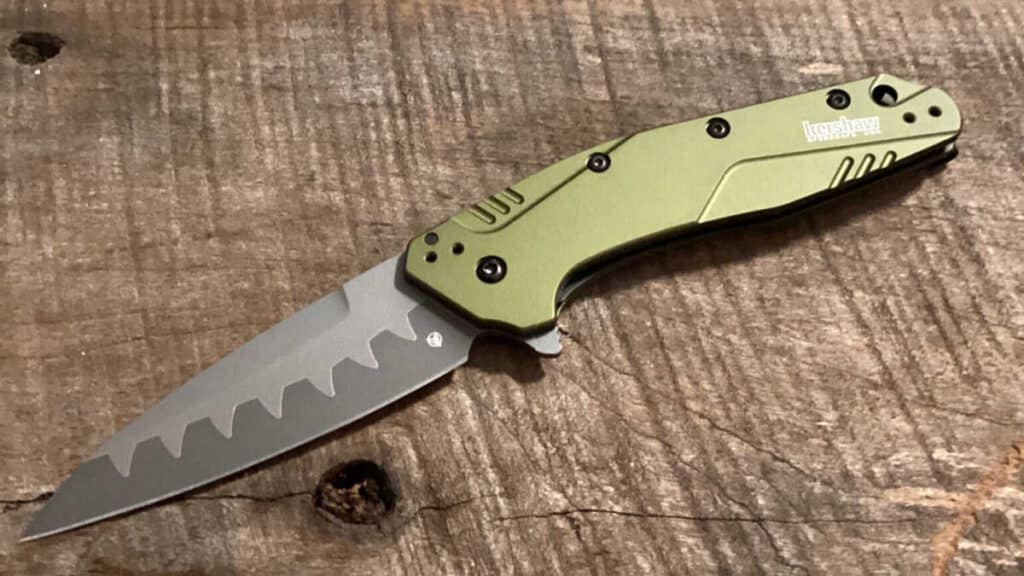
N690, also produced by Bohler, is a high-quality stainless steel known for its balance of hardness and corrosion resistance. Widely used in hunting and diving knives, N690 provides a good blend of performance characteristics at a reasonable cost.
Steel Composition
The first comparison point is the chemical makeup of each steel.
M390
- Carbon: 1.9%
- Chromium: 20%
- Molybdenum: 1%
- Vanadium: 4%
- Tungsten: 1%
- Manganese: .3%
- Silicon: .7%
- Phosphorus: .02%
- Sulfur: .02%
N690
- Carbon: 1.07%
- Chromium: 17%
- Cobalt: 1.5%
- Molybdenum: 1.1%
- Vanadium: .1%
- Manganese: .4%
- Silicon: .4%
- Phosphorus: .02%
- Sulfur: .02%
As shown above, M390 possesses significantly more Carbon and Chromium, contributing to its outstanding hardness and corrosion resistance. It also has a higher Vanadium content, which improves its wear resistance.
M390 vs N690 – Comprehensive Comparison
Hardness
Hardness greatly influences the edge retention and wear resistance of knife steel.
M390 has a Rockwell hardness (HRC) of 60-62, demonstrating an exceptional balance between hardness and toughness. Its remarkable hardness allows for outstanding edge retention, making it ideal for demanding tasks.
N690 has an HRC of 57-59. While it may not be as hard as M390, N690 is still very capable and provides adequate edge retention and wear resistance for general use.
Toughness
Toughness describes a steel’s capacity to resist chips and cracks.
M390, while hard, also boasts good toughness. This steel is designed to endure demanding conditions, resisting chipping and cracking, thus making it an excellent choice for heavy-duty knives.
N690, on the other hand, is slightly less hard but offers great toughness. It’s suitable for general use, providing a reliable performance even under strenuous conditions.
Corrosion Resistance
Corrosion resistance determines how effectively a steel can resist rust and oxidation.
As a stainless steel with an impressive 20% Chromium, M390 boasts exceptional corrosion resistance, making it a prime choice for use in humid or marine environments.
N690, although falling slightly short with 17% Chromium, still provides commendable corrosion resistance, especially when well-maintained.
Ease of Sharpening
Ease of Sharpening refers to how simple the steel is to sharpen with conventional methods. It usually inversely correlates with edge retention and hardness.
While M390 is a bit challenging to sharpen due to its high hardness, it’s still possible with the right tools and a little patience. It can hold a razor-sharp edge for extended periods, reducing the frequency of sharpening.
N690, in comparison, is easier to sharpen thanks to its lower hardness. Although it might require more frequent sharpening, it can achieve a razor-sharp edge without much difficulty.
Edge Retention
Edge retention signifies how long a blade can keep its edge during use.
With its high hardness, M390 provides outstanding edge retention, making it ideal for tasks that require consistent cutting performance over time.
N690 also offers good edge retention, although it may require more frequent sharpening than M390 due to its lower hardness.
Price
M390, as a premium knife steel, comes with a heftier price tag than N690. However, its exceptional properties and performance justify the investment.
N690 offers a more economical alternative to M390, providing a balance of performance characteristics suitable for a broad range of applications at a reasonable cost.
Conclusion
Both M390 and N690 are reputable blade steels, each with its unique strengths and weaknesses. M390 is a hard, corrosion-resistant steel with phenomenal edge retention, although it can be a bit challenging to sharpen. It’s an excellent choice for premium, high-performance knives.
N690, while not as hard or corrosion-resistant as M390, still provides a balanced performance with good toughness, corrosion resistance, and easier sharpening. It’s a good choice for knives intended for general use or for those working with a more limited budget.
Ultimately, the choice between M390 and N690 will depend on the intended use of the knife and individual preferences. Both steels are laudable choices for knives and are popular amongst knife makers and manufacturers. It’s crucial to select a reputable brand and manufacturer when buying a knife to ensure you’re getting the most out of the steel’s potential.
N690 Knife Steel – How Good Is It Really? (My Full Review)
Your Guide To Modern Obsidian Knives (And Where To Buy One)
What Is A Santoku Knife? (And When To Use One…)
N690 vs 154CM – Which Makes Better Knives?
Are Butterfly Knives Illegal? (In Which States & Why…)
Elmax vs Magnacut – Battle of the Blade Steels
When you visit a merchant by clicking a link on this site we may make a commission on anything you buy (at no additional cost to you). Affiliate programs and affiliations include, but are not limited to Amazon Associates and the eBay Partner Network.”